BlackMoon
- 106
- Global rank
- 82
- Month rank
- 72
- Week rank
BlackMoon also known as KrBanker is a trojan aimed at stealing payment credentials. It specializes in man-in-the-browser (MitB) attacks, web injection, and credential theft to compromise users' online banking accounts. It was first noticed in early 2014 attacking banks in South Korea and has impressively evolved since by adding a number of new infiltration techniques and information stealing methods.
- Trojan
- Type
- Unknown
- Origin
- 1 February, 2014
- First seen
- 20 October, 2026
- Last seen
How to analyze BlackMoon with ANY.RUN
IOCs
IP addresses
- 150.171.109.105
- 2.16.204.138
- 49.235.189.22
- 101.43.66.111
- 135.233.95.135
- 48.192.1.65
- 135.233.95.144
- 48.209.133.15
- 20.190.159.129
- 111.229.191.137
- 23.59.18.102
- 172.211.123.250
- 2.16.204.148
- 23.11.40.157
- 204.79.197.203
- 40.126.31.130
- 172.211.123.248
- 61.174.8.171
- 20.165.94.63
- 48.192.1.64
Hashes
- 8c8dcaf27395fc13e3f7ddb1d23b03715d8f23211619f3283e26ac992e346d8b
- a4e5b9e377a10dcf8f4a8be4ab389a947396f0232a4bf36b69473871b5488dce
- 923242a721d68e22efa323941768297a9f74ab9be16985378d721023163abef7
- bafb60c415a9b2d4fa7170a4f43c404a6cd20212a09e159b9f4048385b84e384
- 0840e3cc38266ce259e1c8213601294acc206ea179f8c51b6f9b8fcf653b0ca7
- 2b3a7bafc2eb1e214f1e4738e24cfefccb652a1ca1a163d5a9dbd10553a954ab
- 0b49daff18ee89f931a86535b886763515651bed010e2b8d7f7d947d00cf380c
- fc107facd07a7030fbf1900b455437e1d6cd13405a003565b6db145471e65a25
- f49b515eedeed1abe391bc32f15ce43d3582cb6c41ff944fa9c79f476d5824ba
- 5d78b4424de265c476d4798de1c7acf4fc1995a21eb230848c8704cb975b8598
- 16be51c61a21d1c3ed859cc959ac6bcb052ce19528d05c1cfe3b7e33440f3bb1
- 9b551a6030e67ff8f83673f28e5bf7eb79d83ef5e2f1780d22c63dccf802d056
- e1961060660fcae37dd8c6dda4e55da5b3137953b451b0bf686517ed325371d8
- bcf34656a64696cf0284a8d42d4ee9bcdc3d14559d34012a39a2b7920bafa42d
- a3d136be1e1f54f09fd497a5d46d4c9d0a48962cdaa517817522c208ca3f1299
- 15c5abd30e550b8908d73bd43d68f6b781b0c0e4b1797ab06bc2a629270d8b8c
- ffb4c27cea229d2a4446918692049965db6509dbc71f00c463650e38fa96a223
- 082ae5582ddd013f4a31114678210cdaa196c6e3fbf381c0b9ee421721da7024
- 14dadb99701640e909070008c21a98d02a4572c4dc280acacf1fd37cc6de2792
- 7b93fbc4a9fbb4e3a8d6e29d35fbf92f4f763831b27b8f595ff0d78e93c5d277
Domains
- login.live.com
- google.com
- activation-v2.sls.microsoft.com
- self.events.data.microsoft.com
- ecs.office.com
- www.microsoft.com
- slscr.update.microsoft.com
- ocsp.digicert.com
- crl.microsoft.com
- client.wns.windows.com
- fe3cr.delivery.mp.microsoft.com
- settings-win.data.microsoft.com
- oneocsp.microsoft.com
- status.rapidssl.com
- th.bing.com
- nexusrules.officeapps.live.com
- 1831488479.cdn.123clouddisk.com
- ocsp.digicert.cn
- dns.msftncsi.com
- officeclient.microsoft.com
URLs
- http://crl.microsoft.com/pki/crl/products/microoceraut2011_2011_03_22.crl
- http://www.microsoft.com/pkiops/crl/microsoft%20secure%20server%20ca%202026.crl
- http://ocsp.digicert.com/mfewtzbnmeswstajbgurdgmcgguabbtrjrydryt%2bapf3gspypfhbxr5xtqqus9tippmhxdiunkhmewnpyim8s8yceajtxtab8my1oj8mfwpz%2f7y%3d
- http://oneocsp.microsoft.com/ocsp/mfqwujbqme4wtdajbgurdgmcgguabbq3l3%2f%2fa6adk8nray2gxzvayrhg4aqub6t%2b2v%2bxq3lso2d33ojhnyhhqoucezmaaaafuwohyjguzpcaaaaaaau%3d
- http://ocsp.digicert.com/mfewtzbnmeswstajbgurdgmcgguabbq50otx%2fh0ztl%2bz8sipi7wewvxdlqqutijuibiv5unu5g%2f6%2brks7qyxjzkceaz1vqyrvgl0erhqlcpm8gy%3d
- https://login.live.com/rst2.srf
- https://login.live.com/ppsecure/deviceaddcredential.srf
- http://www.microsoft.com/pkiops/crl/microsoft%20ecc%20update%20secure%20server%20ca%202.1.crl
- https://slscr.update.microsoft.com/sls/%7b522d76a4-93e1-47f8-b8ce-07c937ad1a1e%7d/x64/10.0.19045.4046/0?ch=686&l=en-us&p=&pt=0x30&wua=10.0.19041.3996&mk=dell&md=dell
- https://fe3cr.delivery.mp.microsoft.com/clientwebservice/ping
- https://slscr.update.microsoft.com/sls/ping
- https://slscr.update.microsoft.com/sls/%7be7a50285-d08d-499d-9ff8-180fdc2332bc%7d/x64/10.0.19045.4046/0?ch=686&l=en-us&p=&pt=0x30&wua=10.0.19041.3996&mk=dell&md=dell
- https://activation-v2.sls.microsoft.com/slactivateproduct/slactivateproduct.asmx?configextension=retail
- http://ocsp.digicert.cn/mfewtzbnmeswstajbgurdgmcgguabbsauqybmq2awn1rh6doh%2fsbygfv7gqua95qnvbrtltm8kpigxvdl7i90vucea%2fgmquetqmxbsumjhpisgg%3d
- http://ocsp.digicert.com/mfewtzbnmeswstajbgurdgmcgguabbq50otx%2fh0ztl%2bz8sipi7wewvxdlqqutijuibiv5unu5g%2f6%2brks7qyxjzkceasllclo2yeqfabomvkkdvo%3d
- http://status.rapidssl.com/mfewtzbnmeswstajbgurdgmcgguabbrjiukgt2m88fz4nxc1lu6m%2fjvkagqudntsgkkpsmckubtuesriuojrvjgcearop3tndpaor8tcg8l56sk%3d
- https://1831488479.cdn.123clouddisk.com/1831488479/bb/yp/2026928/2221_41.exe
- http://ctldl.windowsupdate.com/msdownload/update/v3/static/trustedr/en/authrootstl.cab?07c1fbf178e6bc72
- http://ctldl.windowsupdate.com/msdownload/update/v3/static/trustedr/en/pinrulesstl.cab?ed74d318fe7664f8
- https://settings-win.data.microsoft.com/settings/v3.0/onesettings/client?osversionfull=10.0.22000.795.amd64fre.co_release.210604-1628&localdeviceid=s%3adacd04bd-5869-44da-9fd2-107288ff2e26&flightring=retail&attrdataver=183&osuilocale=en-us&osskuid=48&app=wosc&appver=&isflightingenabled=0&telemetrylevel=1&devicefamily=windows.desktop
Last seen at
What is BlackMoon malware
BlackMoon (KRBanker) is one of the most sophisticated banking trojans, exploiting MitB attacks and web injections to steal financial data. Its stealthy evasion techniques, 2FA bypasses, and browser manipulation make it highly dangerous. Initially used in attacks targeting South Korea, it has since spread all over the world and threatens individuals and organizations in any region.
At the dawn of its “career" in 2015-2016, it employed a “pharming” technique to steal banking credentials. It redirected users to a fake website that imitated one of the banking sites and invited visitors to submit their payment data. The data is sent to C2 servers controlled by attackers, 2FA is bypassed by injecting fake OTP fields or session hijacking.
Beside luring information out of users, the malware generates fake alerts on banking websites prompting users to download a malicious security tool. BlackMoon employs a number of anti-detection and persistence mechanics. It injects itself into legitimate system processes, modifies Windows Registry, schedules tasks and startup entries. It also changes signatures to evade static detection, uses code obfuscation and targets specific banking URLs to minimize noise in network logs.
Blackmoon is detectable with threat intelligence tools by a number of indicators: associated domains, IPs, hashes, as well as known behavioral patterns. Network monitoring tools are triggered by outbound traffic to suspicious C2 servers, abnormal DNS queries, HTTP requests with suspicious headers related to web injections.
Technical details of BlackMoon malware
BlackMoon has some unique and some typical for malware of this type features that make it effective and hard to oppose.
- Its infiltration methods of choice are phishing emails, social engineering, and malvertising as ways of delivering malicious attachments or links to fake banking login pages.
- It also is distributed via malicious software disguised as legitimate banking or security tools.
- It establishes itself in the system by modifying registry keys and injecting itself into legitimate system processes like explorer.exe.
- It infiltrates into popular browsers and modifies banking login pages.
- Fake login forms send users’ credentials to attackers’ C2 servers.
- The information BlackMoon is aimed to steal includes online banking credentials (usernames, passwords), credit card details, personal identification information. It may gather them by logging keystrokes, capturing screenshots, and intercepting data entered into web forms.
- KRBanker can provide attackers with remote access to the infected system to execute commands, upload additional malware, or exfiltrate data.
- The measures of protection against BlackMoon must include proactive hunting for the malware indicators within the network using threat intelligence and forensic tools. Patch management, endpoint protection, multi-factor authentication, network segmentation must be employed.
The Execution process of BlackMoon
Within ANY.RUN's Interactive Sandbox, we can observe the malware's entire execution chain in a safe virtual environment.
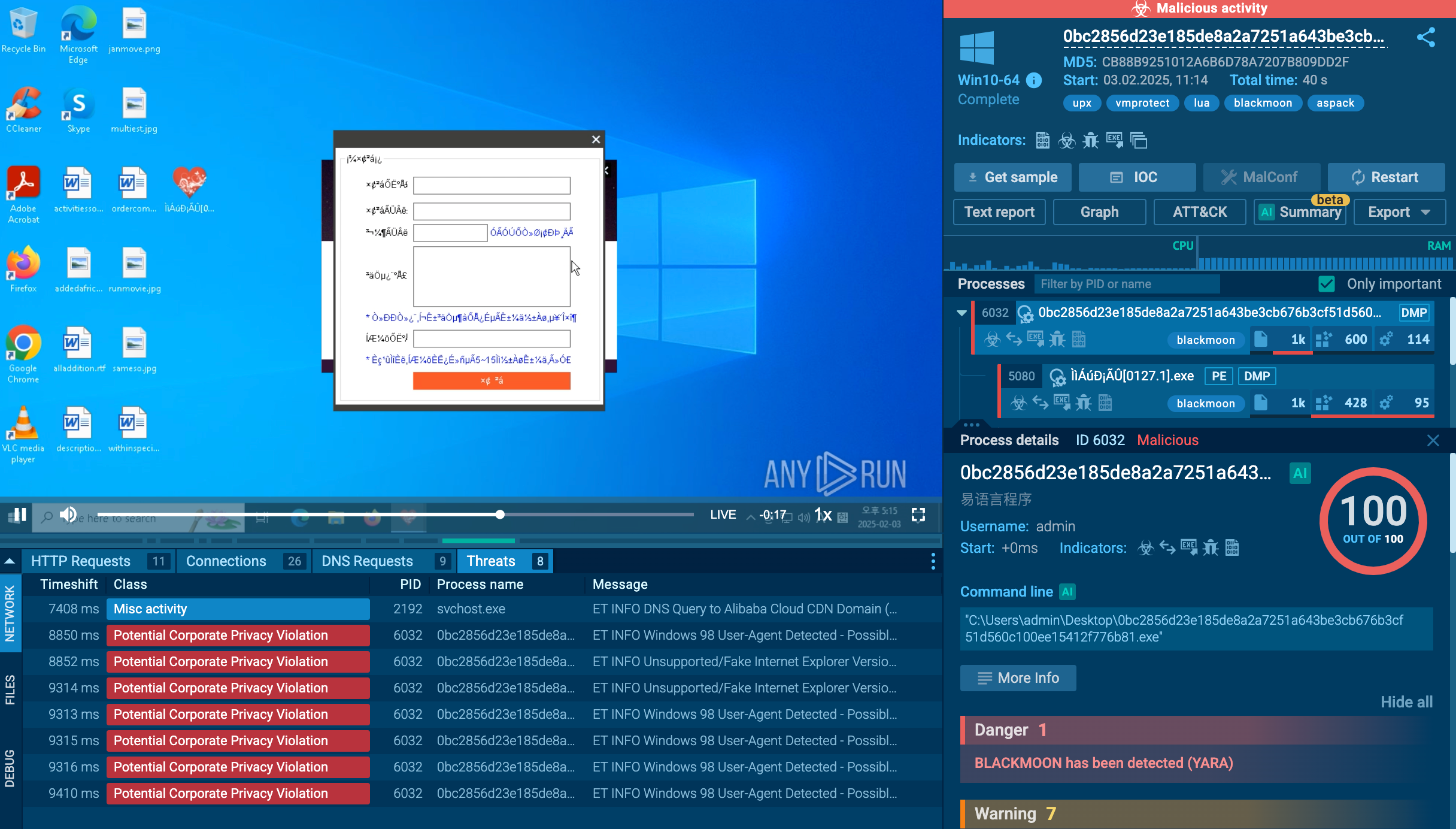
BlackMoon malware employs a multi-stage execution chain specifically designed for financial theft, frequently targeting South Korean banking institutions. The infection process typically begins with a dropper file delivered through phishing campaigns or exploit kits that leverage browser vulnerabilities.
Once executed, this dropper retrieves additional components necessary for the BlackMoon Trojan’s full functionality. The malware’s operation is divided into three distinct stages. In the first stage, the Mini Downloader fetches a second component, which in turn initiates the next phase. The second stage uses the KRDownloader to complete the installation.
After successfully downloading its payload, KRDownloader executes it and then self-deletes to evade detection. The payload commonly includes credential theft features, often deploying man-in-the-browser techniques to intercept user credentials during interactions with banking websites. Once installed, BlackMoon persists on the system by modifying registry keys and, in some cases, altering the local Hosts file. These changes redirect users attempting to access legitimate banking sites to attacker-controlled phishing pages.
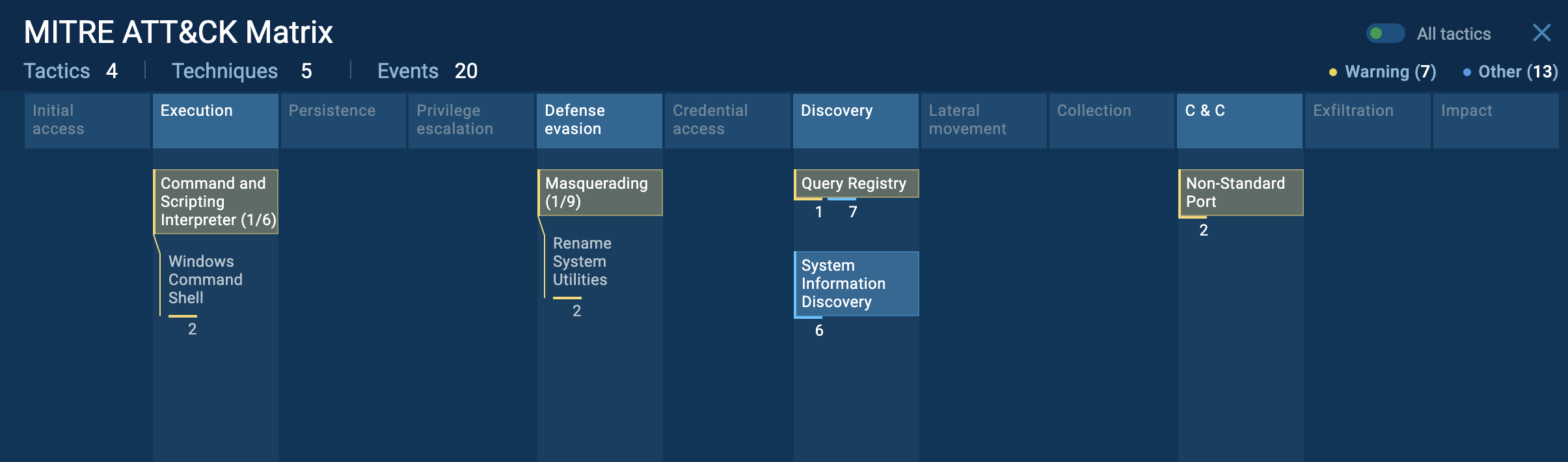
The use of a Proxy Auto-Config (PAC) file further enhances stealth, allowing BlackMoon to intercept and manipulate web traffic without immediately arousing suspicion. Beyond credential theft and phishing, BlackMoon maintains communication with its command-and-control (C&C) servers to receive updates and instructions. It retrieves encoded configuration blocks from hardcoded URLs, dictating operational parameters and target websites. This communication channel is critical for retaining control over infected devices and adjusting to new targets or evasion methods.
Overall, BlackMoon’s carefully orchestrated, multi-stage downloader framework maximizes stealth and efficiency in delivering its malicious payload. This layered approach not only complicates analysis for security researchers but also enhances its effectiveness in compromising financial institutions and stealing sensitive user information.
Collect Threat Intelligence on BlackMoon Ransomware
Explore BlackMoon’s IOCs, IOBs and IOAs via ANY.RUN’s Threat Intelligence Lookup searches and collect data for setting up detection and response in your network.
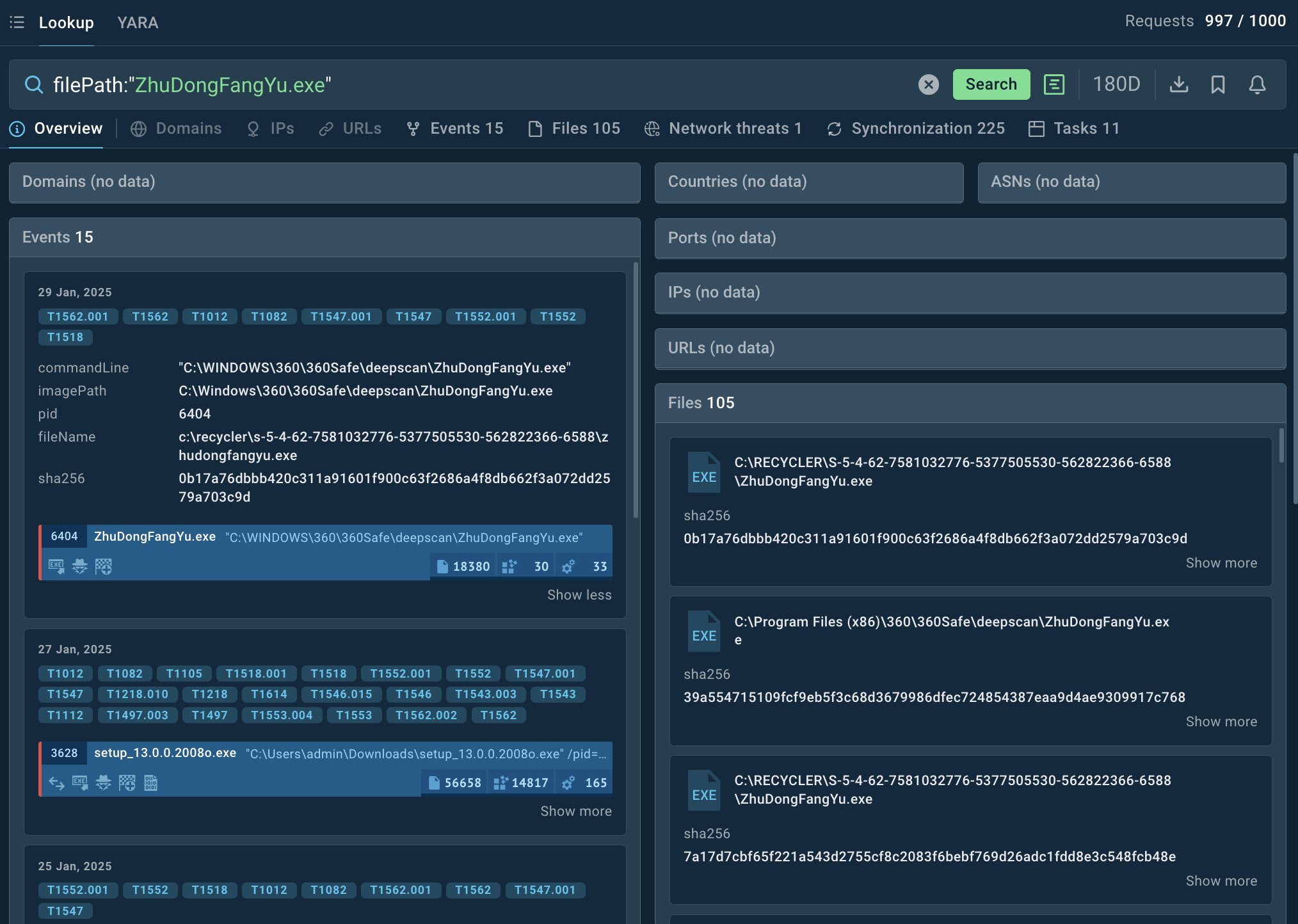
Leverage TI feeds to track C2 infrastructure, malware hashes, keep a watch over evolving tactics of KRBanker via MITRE ATT&CK mappings. For example, we can use the following query filePath:"ZhuDongFangYu.exe" to find sandbox reports featuring the file named ZhuDongFangYu commonly used in BlackMoon attacks.
BlackMoon malware distribution methods
KRBanker typically spreads through:
- Drive-by Downloads: Users visiting compromised or malicious websites can get infected via exploit kits that use browser vulnerabilities.
- Phishing Emails & Social Engineering: Victims receive malicious attachments or links leading to fake banking login pages.
- Trojanized Software: Users install malware disguised as legitimate banking or security tools.
Conclusion
BlackMoon remains highly dangerous because it leads directly to financial losses through critical data theft. Its stealthy evasion techniques, 2FA bypasses, and browser manipulation also put it in the high-risk group. Using threat intelligence-driven detection and response, security teams can monitor IOCs, implement behavioral analytics, and harden authentication mechanisms to combat this evolving banking malware threat.
Sign up for ANY.RUN to analyze malware and phishing threats for free.
Other malware & phishing threats
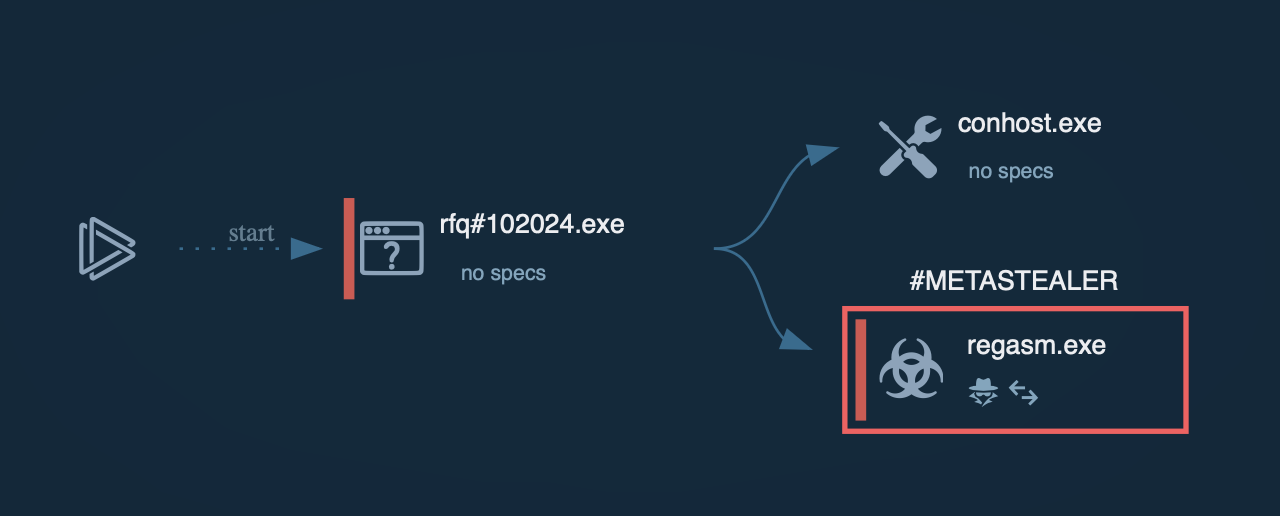 MetaStealerMetaStealer is an info-stealing malware primarily targeting sensitive data like login credentials, payment details, and browser history. It typically infects systems via phishing emails or malicious downloads and can exfiltrate data to a command and control (C2) server. MetaStealer is known for its stealthy techniques, including evasion and persistence mechanisms, which make it difficult to detect. This malware has been actively used in various cyberattacks, particularly for financial theft and credential harvesting from individuals and organizations.
 Overlord RATOverlord RAT is a cross-platform remote access framework with Go-based agents and a TypeScript/Node/Bun server. It supports encrypted WebSocket C2, remote control, persistence, and multiple operating systems, including Windows, Linux, and macOS.
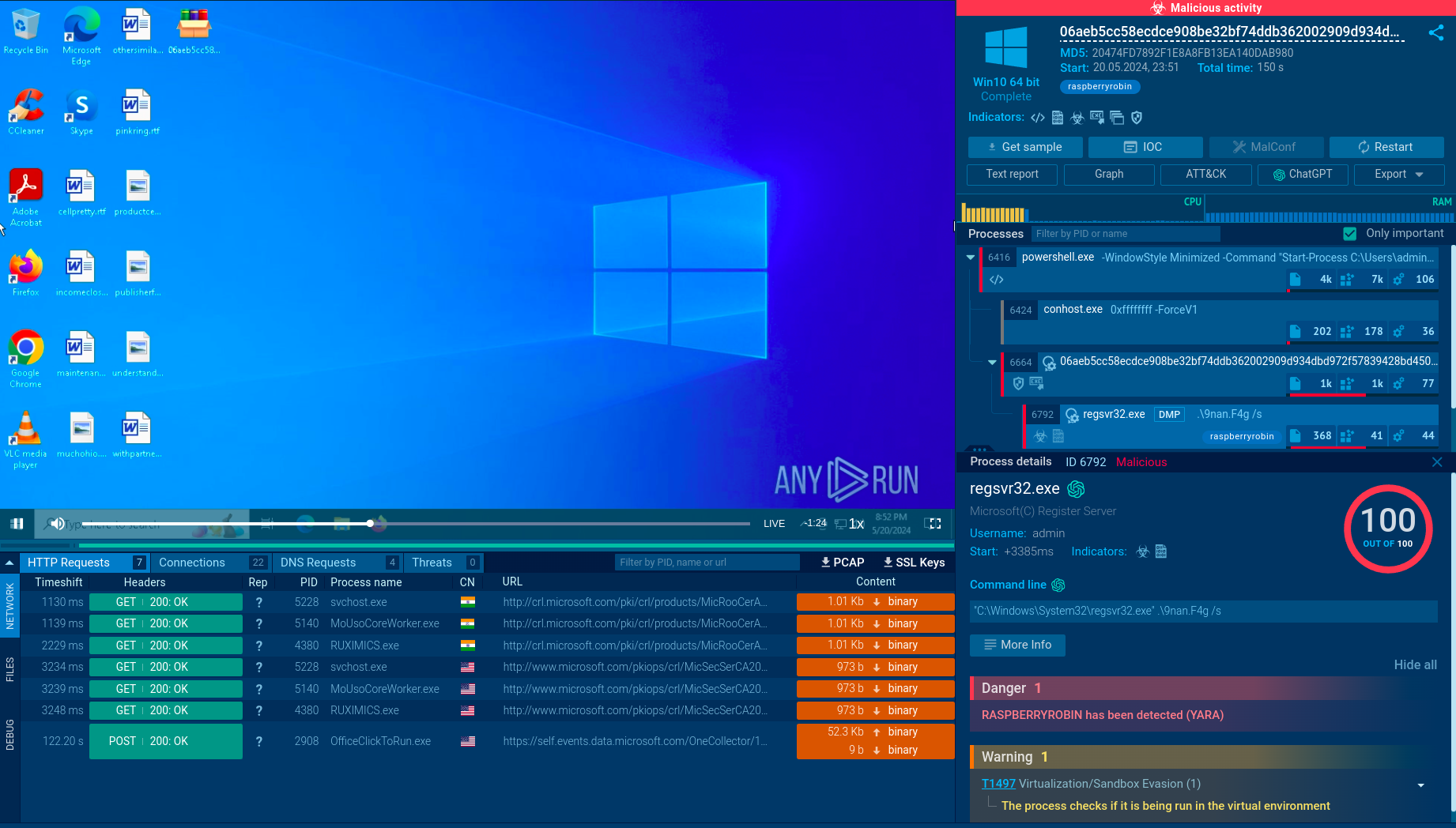 Raspberry RobinRaspberry Robin is a trojan that primarily spreads through infected USB drives and exploits legitimate Windows commands. This malware is known for its advanced obfuscation techniques, anti-debugging mechanisms, and ability to gain persistence on infected systems. Raspberry Robin often communicates with command-and-control servers over the TOR network and can download additional malicious payloads.
 Mirage2FAMirage2FA is a Phishing-as-a-Service toolkit designed to compromise Microsoft 365 accounts and bypass conventional MFA through Adversary-in-the-Middle attacks. It uses malicious HTML, XHTML, and SVG files to deliver JavaScript loaders that connect victims to attacker-controlled phishing infrastructure. The toolkit relays authentication in real time, capturing credentials, 2FA codes, and authenticated session cookies. It also uses browser fingerprinting, WebSockets, obfuscation, and rotating infrastructure to evade detection and maintain access to compromised accounts.
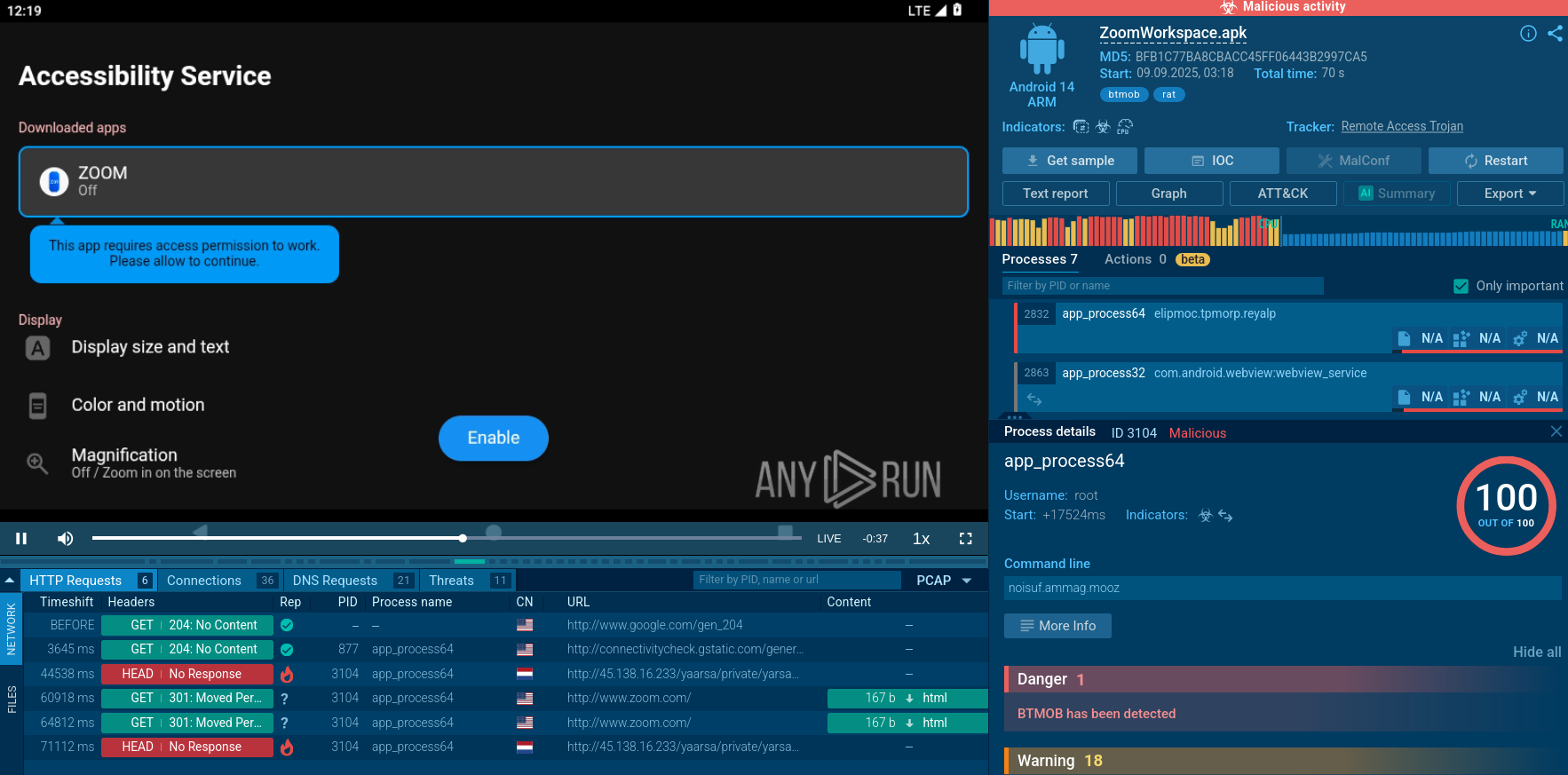 BTMOB RATBTMOB RAT is a remote access Trojan (RAT) designed to give attackers full control over infected devices. It targets Windows and Android endpoints. Its modular structure allows operators to tailor capabilities, making it suitable for espionage, credential theft, financial fraud, and establishing long-term footholds in corporate networks.
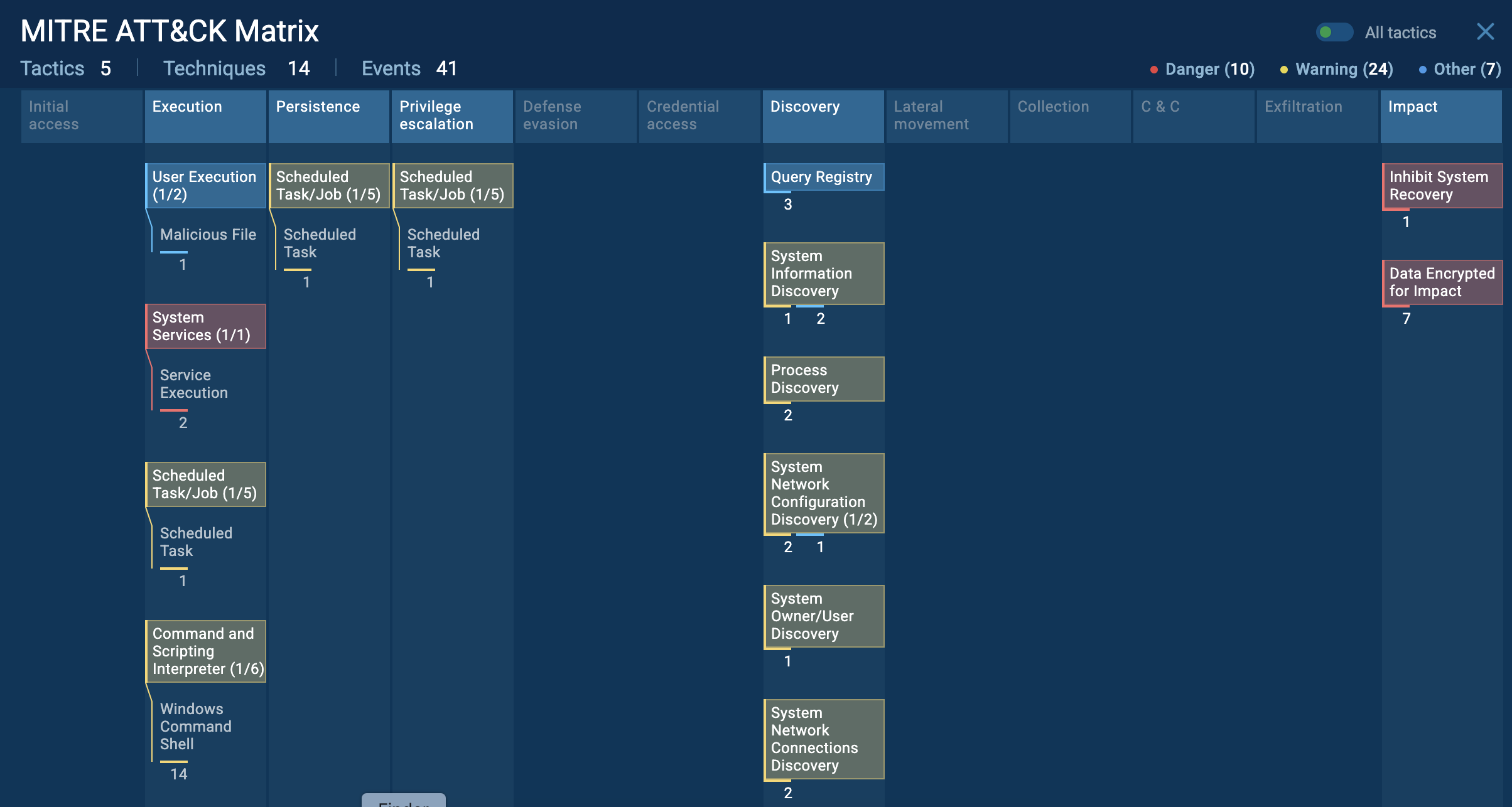 Fog RansomwareFog is a ransomware strain that locks and steals sensitive information both on Windows and Linux endpoints. The medial ransom demand is $220,000. The medial payment is $100,000.
First spotted in the spring of 2024, it was used to attack educational organizations in the USA, later expanding on other sectors and countries. Main distribution method — compromised VPN credentials.